Friday, December 07, 2007

Green Reading: Barnes and Noble, Hastings Books and Music to Feature Magazines Using Recycled Paper

"Green Paper for People and Planet” Launched at Major US Book Stores by Co-op America’s PAPER Project and Next Steps Marketing

Nearly 400 Barnes and Noble (B&N) and Hastings Books and Music stores nationwide will run in-store promotions highlighting magazines that use recycled paper, under a major push by Co-op America’s Magazine PAPER Project and Next Steps Marketing.

The “Green Paper for People and Planet” promotion will occupy prominent fixtures within these stores with special signage to highlight the magazines’ commitment to the environment. Each publication featured in these unique fixtures is an environmental leader in using recycled paper with at least 30 percent post-consumer content.

Six magazines that use recycled paper – Shape, Fast Company, Mother Jones, ReadyMade, Nickelodeon Magazine, and Body + Soul – will be prominently featured during November in 153 Hastings Books and Music stores. To view Hastings locations nationwide, visit http://www.hastingsentertainment.com/catalog/.

Barnes and Noble has committed to offering 10 slots for magazines that use recycled paper at a heavily discounted rate with special signage in their top 240 stores in January. This promotion will roll out more widely in April 2008 in conjunction with Earth Day.

Tuesday, December 04, 2007

New Green Publishing Blog by Frank Locantore

Folio: Magazine, the premiere industry journal for the magazine publishing industry, has a blog which now features a weekly column on environmental issues in the industry written by Co-op America's Frank Locantore. Check it out, as in his first posting he takes on the recent surge in unverified claims of "carbon-nuetral" paper by several paper companies.

Monday, December 03, 2007

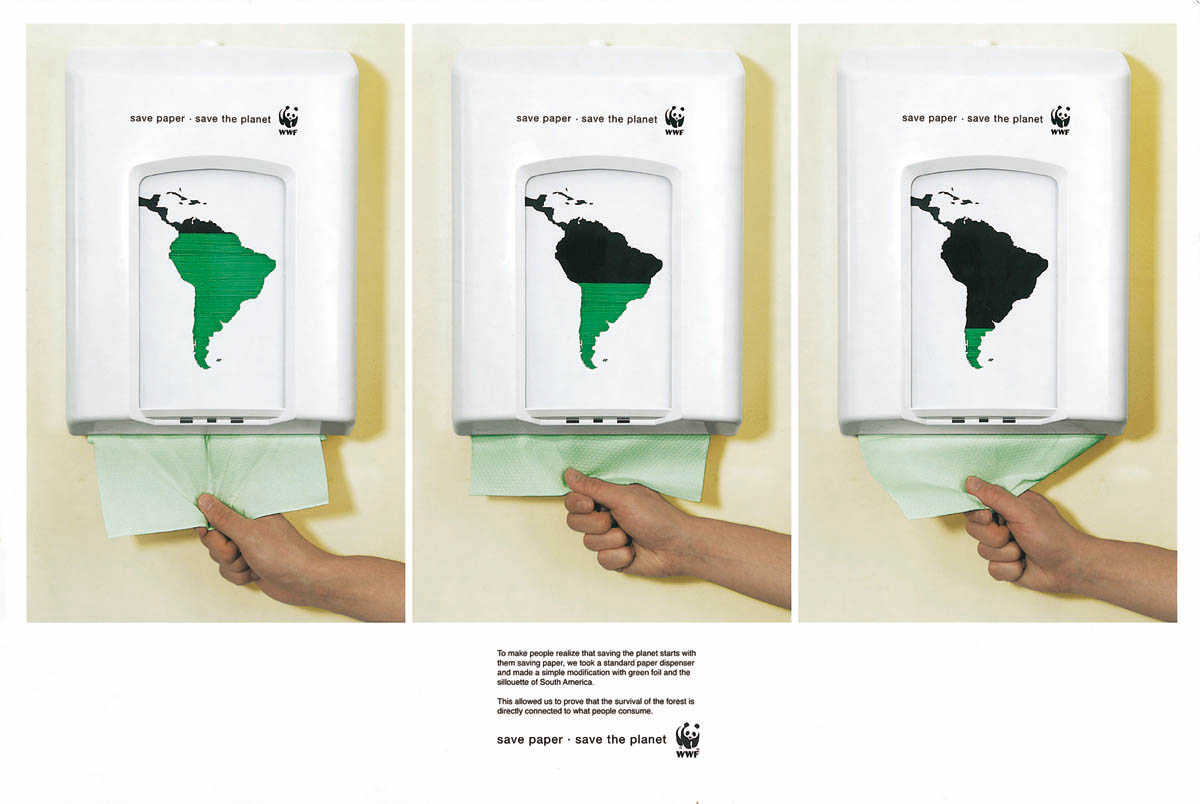
WWF Guide to Buying Paper

WWF International has released a new Guide to Buying Paper. While targeted for a European market, it is relevant to any organization making paper purchasing decisions with social and environmental responsibility. Go Get It Here.

Link to higher quality image: http://www.ibelieveinadv.com/commons/wwfpaperdispenser.jpg

Monday, November 26, 2007

File this one under ironic...


This is absolutely hilarious, the direct marketer's are installing recycling bins to save money and yet they send out millions of pounds of junk mail a year to American homes... when will the insanity end?

Direct Marketer’s Recycle Bins Save $500,000 Per Year

Direct Marketer’s Recycle Bins Save $500,000 Per Year

Direct mail and marketing firm PEP-Direct says it will save approximately $500,000 a year working with International Paper Products Corp. to reduce the amount of waste it sends to landfills and reduce the cost of waste removal, DM News reports.

IPP is providing signage and receptacles for PEP’s non-recyclable materials such as label stock and packaging. The companies have been working together for about a month.

IPP empties the recycle bins once or twice a week (the company will travel up to 100 miles from its Westfield, MA plant) and then compacts the waste into Enviro-Fuelcubes, which are burned in place of fossil fuels. PEP is using the arrangement to promote a greener image.

Monday, November 19, 2007

Catalog Choice in New York Times

Catalog Choice, the new, free service from Environmental Paper Network member organizations NWF, NRDC, and the Ecology Center (Berkeley) which lets consumers easily opt out of catalogs they no longer wish to receive, its still growing, and so is the buzz. Today, the New York Times.

The initiative is tapping into a lot of common sense and has a growing list of companies partnering up with it, such as L.L. Bean. In the NYTimes article, L.L. Bean says, "We don't want people to get our catalogs who don't want our catalogs. We don't want to waste paper or our customer's time."

Since October 9, Catalog Choice has helped 165,000 people opt out of almost 1.7 million catalogs.

Thank goodness. The Environmental Paper Network's State of the Paper Industry Report shows that experts have been predicting continued, rapid growth of paper use, and increasing environmental challenges as a result. Efforts like Catalog Choice are critical to changing the course.

Simon and Shuster Steps Up Recycled Paper Use in US

From Environmental Leader:

For books printed and bound in the U.S., Simon & Schuster plans to increase the level of recycled fiber in its purchased paper to 25 percent or more by 2012, a 150 percent increase from a current 10 percent baseline level.

Simon & Schuster purchases approximately 70,000 tons of paper annually. At current production levels, the shift to 25 percent recycled fiber will result in saving approximately 483,000 trees annually and reducing greenhouse gases by nearly 85 million pounds, the company reports.

Thursday, November 01, 2007

Canada's Biggest Printer Adopts Paper Purchasing Policy

Thanks to help from EPN member Markets Initiative, Transcontinental has announced the implementation of a Paper Purchasing Policy that promotes the use of environmentally preferable papers through a classification process that allows clients to make an informed choice regarding the paper they choose for their printing and publishing needs.

“Transcontinental is the first major North American print-media conglomerate to take such a comprehensive step towards safeguarding our forests and our climate,” said Nicole Rycroft, Executive Director, Markets Initiative. “This is good news for caribou, forests such as the Boreal and for clients looking for environmental printing solutions. We look forward to other major North American and global printers and publishers developing environmental paper initiatives.”

The largest printer in Canada and sixth-largest in North America, Transcontinental also ranks as the country’s leading publisher of consumer magazines and French-language educational resources, and its second-largest community newspaper publisher.

For more information about Transcontinental’s Environmental Policy, including its Paper Purchasing Policy, click here.

Wednesday, October 31, 2007

Finally, We Have Catalog Choice

Catalog Choice is the free service that lets you opt-out of unwanted catalogs.

The buzz is growing, and Catalog Choice has been featured in national media including CNN, watch the clip below.


As of October 31st, the Catalog Choice community is 86,146 persons strong, having opted out of 515,128 catalogs. (if you multiply that by the numerous times a year most catalogs come, that's millions of individual catalogs!)

Per capita paper consumption in the United States exceeds 700 lbs/year, by far the most of any nation. There are 19 BILLION catalogs mailed every year in the US. Projects like Catalog Choice are helping to protect the world's endangered forests and reduce the greenhouse gas emissions of wasteful and unnecessary paper consumption.

Paste Makes the Switch to Recycled

From the Environmental Leader:

Beginning with its November issue, Paste Magazine will now be composed of 30 percent post-consumer recycled content paper - up from the 10 percent they are currently using.

By making this decision, every year Paste will now save 2,000 trees, and will save enough energy to power 50+ homes.

“Shifting to 30 percent post-consumer recycled content paper is a small price to pay to help our future,” added Nick Marino, managing editor of Paste magazine. “Our hope is that other magazines will join in our commitment to recycling. As more publications get on board, the price of recycled paper will go down and the quality of the paper will go up!”

Thursday, October 25, 2007

London's Project Freesheet

If you've been in a major city in the last few years, you've experienced the phenomenon of free mini newspapers now being handed out as a new strategy for newspapers to sell advertising. I'm willing to bet that, you, like me, had a certain thought at least cross your mind as you saw all the discarded papers piling up: "Wow, what a waste."

Free newspaper circulation now accounts for 30% of the European newspaper market, and 8% of the World newspaper market. Since 2001 free daily newspaper circulation has more than tripled from 12 million to over 40 million worldwide. That is a percentage increase of over 340% in 6 years. This equates to the use of over 9000 trees (allowing for 75% recycled content) every day.

Well, finally, an organized response is just beginning and its emerging as a London petition effort called Project Freesheet.

From the website: Project Freesheet is a web based campaign to highlight issues and concerns raised by the ever increasing amount of free literature (aka "freesheets") now being handed out on the streets of our cities around the world. By encouraging the public to upload and send in their photos of free literature waste we aim to illustrate the excesses of the free literature publishers through the creation of a visual petition (see the collage) Project Freesheet will continue to exist for as long as freesheet publishers continue to disregard their responsibilities to our streets and the environment. We will campaign about the negative impact of freesheets for as long as products with such questionable environmental credentials are produced

Wednesday, October 24, 2007

Hooray for Everyday with Rachel Ray

Folio magazine is reporting that Everyday with Rachel Ray, the magazine that is a keystone of the enterprises of fast rising Rachel Ray, is switching the paper it is printed on in order to achieve environmental benefits and be more responsible.

"Starting this month, we're printing our magazine on recycled paper and saving 11,500 trees with every issue - that's 115,000 trees a year!" Ray bubbles in November's editor's note. "November is our greenest issue ever."

Its good to see that rather than just selling "The Green Issue" about green topics, like some magazines, Every Day with Rachel Ray is changing its own environmental footprint by switching paper, and being a true business leader. Find out how to make the switch here.

Thursday, October 04, 2007

The First Eco Friendly Bible Arrives

Have you heard the "good news?"

On October 9th, Bible and religion publisher Thomas Nelson Inc. will release the first Bible printed on recycled and FSC certified paper. The Bible is the most widely distributed book in history and Thomas Nelson’s achievement was no small task. Thomas Nelson worked worked with its paper manufacturer, Domtar, to develop a new environmentally responsible paper grade specially suited for the lightweight paper requirements of Bible paper.

Thomas Nelson’s CEO, Mike Hyatt states that, “Thomas Nelson is excited to be taking some important steps toward protecting our natural resources. In addition to offering eco-friendly products, we are striving to implement “green” practices in our daily activities.”

Several other religion publishers also have environmental commitments in place including Ave Maria Press, Baker Publishing Group, Intervarsity Press.

“Given the Bible’s message of stewardship and the growth of the creation care movement we hope to see other Bible and religion publishers following Thomas Nelson’s lead through steps to use paper with less impacts on forests, people, and the climate,"
stated Green Press Initiative director Tyson Miller.

Amen.

Australia: Gunn's Mill Clears Hurdle

(Action on October 3: Bondi Beach, Sydney Australia)


From Australia - Gunn's Mill Update from The Wilderness Society: Federal Environment Minister Malcolm Turnbull today (October 4) annouced his decision to approve Gunns Ltd's Tamar Valley pulp mill, effectively giving the go-ahead for a mill that promises extensive damage to Tasmania’s native forests and waterways.

The Minister's approval is subject to the pulp mill meeting 24 new guidelines, but the guidelines fail to adequately address the concerns of Tasmanians about the damage this mill will cause.

Forest Certification Debate Center Stage

The Montreal Gazette has an article today on news from Markets Initiative that independent research completed by EEM confirms that the Forest Stewardship Council is the most effective sustainable forest management certification available.

EEM, the research firm that produced the report, prepared it for a client it would not name which was seeking to set a paper-purchasing policy. The client is a large Canadian media company, report author Stephanie Hamilton said yesterday.

"The value of the report is that it was independently commissioned and independently conducted while most others were conducted by industry or environmental" groups, said Nicole Rycroft of Markets Initiative.

Wednesday, October 03, 2007

The (Environmental) State of the Paper Industry

The Environmental Paper Network released a report yesterday entitled, The State of the Paper Industry: Monitoring the Indicators of Environmental Performance. The State of the Paper Industry Report monitors environmental performance in the industry, the good, the bad, and the ugly, and, ultimately, it challenges leaders in the industry with a Vision for social and environmental responsibility.

Read about it on GreenBiz.com and The Daily Green

Media: Listen to audio of the press conference here.